If you play Wordle
Wordlock
Five-letter words and green and gold clues, with no six-guess limit and a clock that each solve tops up.
Endless2–3 minPhone + desktop
Play Wordlock12 free games · Updated Oct 23, 2026
A free puzzle for each NYT game where an honest match exists, from five-letter words to mahjong tiles, and a plain note where none does.
Free on Gamefinity. No download, no sign-up.
Closest to NYT Games first. Every one is free to play in your browser on Gamefinity.
If you play Wordle
Five-letter words and green and gold clues, with no six-guess limit and a clock that each solve tops up.
Endless2–3 minPhone + desktop
Play WordlockIf you play Spelling Bee
Seven letters, as many words as you can find in them, and one word that uses all seven for a big bonus.
Play any time90 secPhone + desktop
Play Anagram BlitzDaily set of three, easy to hard
Three number puzzles a day, the same for everyone, climbing from a gentle warm-up to a hard finish.
DailyAbout 2 minPhone + desktop
Play ExactlyIf you play Sudoku
The row, column and box rule you know from Sudoku, on quick 6×6 grids that win back time when solved.
Endless2–4 minPhone + desktop
Play Sudoku SprintIf you play Strands
Trace words through touching letters, diagonals included, the way you drag a path across a Strands board.
Play any time90 secPhone + desktop
Play Letter GridFor the word-search side of Strands
Three timed word searches that grow from 8×8 to 10×10, each with a list of six words to circle.
Play any timeUp to 2 minPhone + desktop
Play Word Search RushIf you play Tiles
Clear a layered board by matching pairs of tiles, then the next board, with no clock until moves run out.
EndlessNo clockPhone + desktop
Play Mahjong MinuteDaily logic puzzles
Ten reasoning puzzles a day, the same for everyone, each with one provable answer and no trivia in it.
Daily + endlessAbout 90 secPhone + desktop
Play Daily IQConnections' word-meaning side
Pick the word that means the same as the one in the middle. It does not sort words into groups.
Endless30 sec–2 minPhone + desktop
Play Synonym SprintA daily you compare afterwards
Ten prompts a day, the same for everyone, and then your answers are laid beside a stranger's to count the matches.
DailyAbout 1 minPhone + desktop
Play Common GroundDaily ten-question quiz
One shared quiz a day: ten general knowledge questions with four choices and a 20-second clock on each.
Daily + endless1–2 minPhone + desktop
Play Daily TriviaPhrase puzzle for word people
Every vowel has been taken out of a well-known saying, and you put them back before its timer runs out.
Endless1–2 minPhone + desktop
Play Vowel StealerThese are the ones closest to NYT Games. Gamefinity has dozens more, from word and number puzzles to arcade runs, all free in your browser.
Browse all gamesNYT Games is the puzzle section of The New York Times. As of October 2026 its subscription page lists twelve games: the Crossword, the Midi, the Mini, Wordle, Spelling Bee, Connections, Crossplay, Letter Boxed, Pips, Strands, Sudoku and Tiles. Most of them hand out a fresh puzzle each day, the same for every player. The NYT help center lists Wordle, Connections, Strands, Pips and Sudoku among the games anyone can play without paying, Spelling Bee gives non-subscribers limited access, and the three crosswords, Letter Boxed and Tiles need a subscription.
This page walks through that lineup one puzzle at a time. Wherever Gamefinity has a free game built on the same idea, it is listed here, closest first, with a note on what it shares and what it does not. Every one of them opens straight in a web browser, phone or laptop, and none asks you to download anything or create an account. Where the honest answer is that nothing fits, as with the crosswords, the four groups of Connections, Letter Boxed and the domino logic of Pips, the page says so rather than stretching a game to cover the gap.
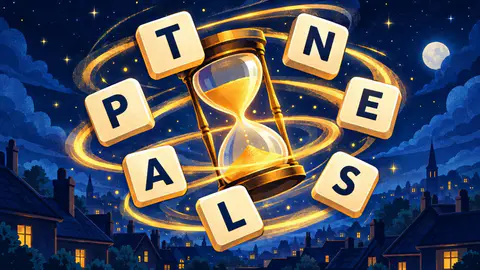
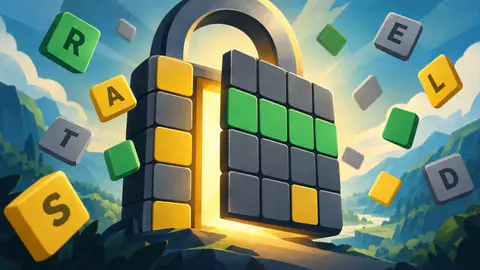
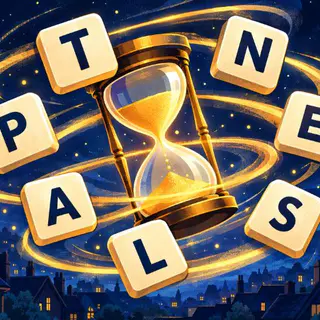
Wordlock hides a five-letter word and paints each guess in three colors. Green marks a letter already in place, gold a letter the answer holds in another position, grey a letter it lacks. A run opens with 90 seconds on the clock. Each word you crack adds time, 20 seconds for the first word and then one second fewer per word, bottoming out at five, and the next word appears at once.
Like NYT Games: The heart of it is the Wordle loop: type a real five-letter word, read the colors, close in. An unlisted word wobbles and is not counted, repeated letters are marked the familiar way, and a word solved in fewer guesses is worth more, so careful deduction still pays.
Different: There is no limit of six tries and no single word of the day. Every run deals new random words, the clock decides when you stop, and a streak multiplier and leaderboards turn it into a race, which Wordle never is. Another run can start the moment one ends.
A round of Anagram Blitz is seven jumbled letters and a 90-second clock. You build words of three to seven letters, each counted once, while a board above the rack keeps an empty slot for every familiar word still hiding in the letters, sorted by length. Shuffle the rack when your eyes stall. Once the clock stops, the missed words are revealed in their slots.
Like NYT Games: The hunt is the Spelling Bee hunt: a handful of letters, long words worth far more than short ones, and in every rack exactly one word that uses all seven letters, much like a pangram. Plurals and verb forms are accepted, and proper nouns are not.
Different: No center letter has to appear in every word, and each tile can be used only once per word, where Spelling Bee lets letters repeat. Three-letter words count, the round lasts 90 seconds rather than all day, and instead of ranks up to Genius and Queen Bee there are points and a streak.
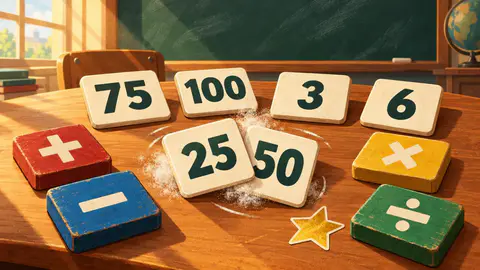
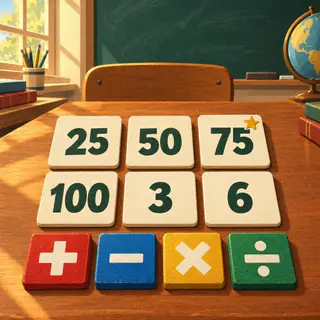
Exactly deals six number cards and a target. Pick a card, then a sign, then another card: those two become a single card carrying the result. Keep combining until some card hits the target. A day holds three of these: first a small two-digit target to warm up, then two three-digit ones, the second harder than the first. Undo is free, and you never have to use every card.
Like NYT Games: It has the shape of an NYT morning: a fixed set for the day, identical for every player, graded from easy to hard much like the Easy, Medium and Hard puzzles NYT gives Sudoku. A solver checks each sum before release, so an exact answer always exists, and between rounds you see how the day's other players did.
Different: It is arithmetic, not words or a grid: you join numbers with plus, minus, times and divide. Each sum has a minute, with time you save carried into the next, and a near miss within ten of the target still earns some marks. The day's three sums are one go, so there is no second try.
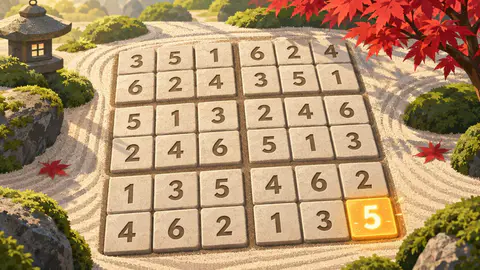
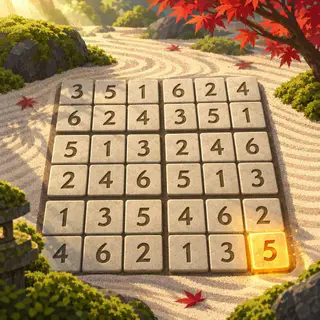
Sudoku Sprint deals 6×6 mini sudokus one after another on a single clock. Every row, column and 2×3 box takes the numbers 1 to 6 once each. You begin with two minutes, every solved grid gives some time back, and the grids get leaner as you go: 20 clues on the first, 17 on the second and 14 from the third on.
Like NYT Games: The thinking is the Sudoku thinking you already do: scan by number, rule out candidates, never guess. Each grid has exactly one solution that pure logic reaches, a notes mode gives you pencil marks, and from the third grid on each one needs a single locked-candidate step, a classic middle-level trick.
Different: The grids are 6×6, not 9×9, and speed matters: right numbers placed in quick succession score more, a mistake takes five seconds off, and when the clock hits zero the run is over. There is no Easy, Medium and Hard of the day. The Endless run ramps up by itself, and a Timed race of three grids is there for a fixed length.
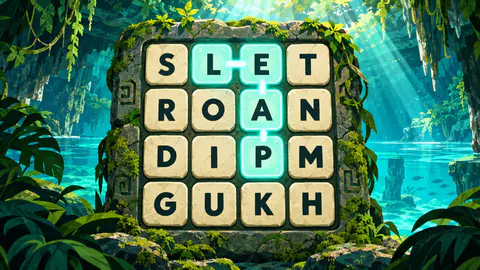
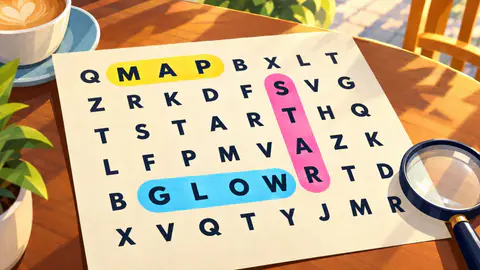
Letter Grid sets sixteen letters in a 4×4 square. Press a letter and drag through its neighbors, up, down, sideways or diagonally, then let go to enter the word. Words need three letters or more, a tile can be used once per word, and you have 90 seconds to find as many as you can. On a computer you can also type the word and press Enter.
Like NYT Games: The gesture is the one Strands players already have in their fingers: a path through adjacent letters that bends wherever the word goes. Long words carry the points, so you keep rereading the same small square for one more find, and at the end a few familiar words you missed are shown.
Different: There is no theme, no spangram and no board to fill: any real word counts, and the grid is smaller than the 6×8 Strands board. It is a 90-second race for points with a streak bonus for quick finds, and each round deals a new grid instead of one puzzle a day.
Word Search Rush is a classic word search with a two-minute clock. A run has three grids: an 8×8 where every word reads forwards, a 9×9 where some run backwards, and a 10×10 where most words lie diagonally or read in reverse, some as long as eight letters. Drag from a word's first letter to its last to circle it and cross it off.
Like NYT Games: Strands is, underneath, a search for hidden words in a block of letters, and this is the plainest version of that search. The filler letters are borrowed from the hidden words, so half-words keep catching your eye on the way to the real ones.
Different: You are told the words in advance, and they run in straight lines rather than winding paths. There is no theme to work out and no spangram, the grids keep spare filler letters, and the clock and a fastest-clear board make it a race.
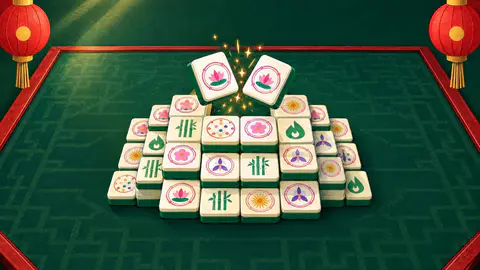
Mahjong Minute is mahjong solitaire on stacks of thick ivory tiles. Tap two identical free tiles, ones with nothing on top and an open left or right side, to lift them away. Boards climb from 48 tiles on two layers to 88 on five, any flower matches any flower and any season any season, and three shuffles rescue you from a stuck board.
Like NYT Games: Tiles players know the quiet pull of a board that empties one match at a time, and both games reward stringing matches together. On its own page Mahjong Minute keeps no clock, so you can take as long as you like over each pair.
Different: A pair has to be two identical tiles, where Tiles clears the parts that two tiles share, and the layers matter: a tile under another cannot be taken yet. It is endless, with a ladder of harder boards, and a run ends only when no free pair and no shuffle are left.
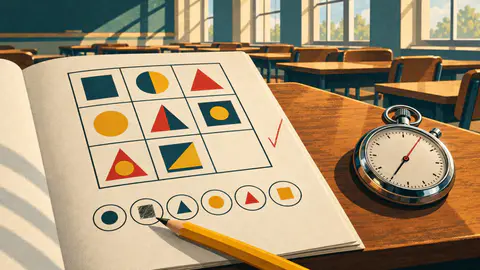
Each day's Daily IQ test is ten puzzles of the kind found in IQ booklets: series of numbers or letters, a 3×3 matrix with a tile missing, odd ones out, rotations, mirror images and paper folds. No question has a deadline, but the points for a right answer start at 1,000 and fall the longer you think. At the end the sheet is graded with an IQ-style score against today's players.
Like NYT Games: For anyone whose favorite part of the NYT page is a logic puzzle, this is pure logic. Every puzzle is generated and then checked by a solver, so exactly one answer fits, and nothing depends on what you happen to know. Everyone gets the same ten, and a new test opens at midnight Eastern Time.
Different: It is multiple choice, and its puzzles are short and visual rather than one long grid. The game says plainly that its score is for fun, not a clinical IQ test. For more, a Timed mode puts a stopwatch on every question and serves new puzzles on each run.
Synonym Sprint shows a word on a sun at the center of a printed sky map, ringed by planets that carry other words. One planet holds a synonym; tap it to move on. The timer begins at 25 seconds and every correct tap returns two, a fourth planet appears once you reach word 10 and a fifth at word 25, and a single wrong pick ends the run.
Like NYT Games: Connections rewards knowing words well enough to look past their first meaning, and this game drills that habit at speed. Each wrong option was checked against every sense of both words, so a decoy is never secretly right, and the pairs climb from everyday words to rarer ones.
Different: There are no sixteen words and no four hidden groups. Each screen is one question with one right answer, the challenge is speed rather than spotting a category, and one mistake ends the run where Connections allows four. Nothing on Gamefinity sorts words into groups the way Connections does.
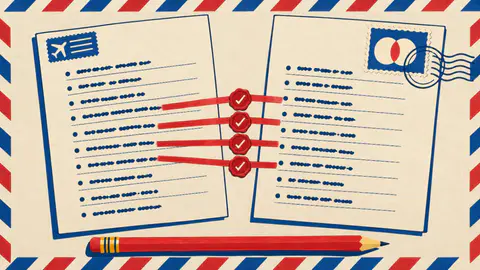
Common Ground posts ten short prompts a day on an airmail postcard, things like a famous Steve or a cartoon dog. You get ten seconds to type the first answer that comes to mind, with suggestions as you type. Then your card is paired with one from a stranger, chosen at random among the people who played the same prompts before you today.
Like NYT Games: Half the fun of the NYT puzzles is talking about them afterwards, and this game is built around that moment. Everyone gets the same prompts, a new set arrives at midnight Eastern Time, and once enough people have played, each row shows the day's most common answer.
Different: It is not a puzzle with a right answer. You score a point for every prompt where you and the stranger said the same thing, so the plain, popular answer tends to be the clever choice. Since the result depends on who you meet, there is no leaderboard.
Daily Trivia is a quiz column of ten questions a day, each with four lettered answers and twenty seconds to choose one. The questions spread over at least seven of eight subject areas, sport, literature and nature among them, and run from two easy openers to two tough closers. At the end a graded sheet shows how you stand against today's players.
Like NYT Games: It keeps the NYT habit of one shared edition a day: the same ten questions for every player, one go each, and a new edition when the day turns over in Eastern Time. Once enough people have answered, a crowd line under each question shows how today's players did.
Different: It tests what you know, not how you reason or spell, and every answer is a choice of four. A Quick version on the same page serves random questions with ten seconds each whenever you want more, and recent editions wait in an archive for days you missed.
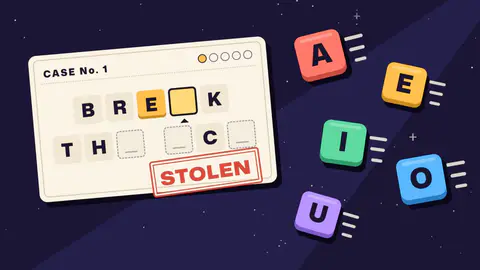
Vowel Stealer shows a familiar phrase with every A, E, I, O and U removed, so a proverb turns into a row of consonants and blanks. Work out the saying, then fill the vowels in from left to right before the phrase's own timer empties. There are more than 900 phrases in the bank, from two-word greetings to long proverbs, and the letter Y is never removed.
Like NYT Games: Word people who enjoy hearing a whole phrase from a few fixed letters will feel at home. Spaces and apostrophes stay in place, so the shape of each word is part of the clue, and the phrases are ones people really say.
Different: It is not a crossword: there are no clues and no crossing answers, only one phrase at a time. You have five hearts that never come back, a wrong vowel or a timeout costs one, and the timers tighten as the phrases grow longer. Endless runs until the hearts are gone; Timed stops at two minutes.
Each NYT puzzle was set beside Gamefinity's public catalog, and a game was matched to it only on something a player notices in the first minute: the same rule, the same kind of board, the same gesture or the same once-a-day rhythm. The cards are ordered by how close that match is. Each one names the NYT puzzle it answers, and the text under the cards spells out the differences, taken from the game's own rules.
If Wordle is the first thing you open each morning, keep Wordlock for the days one word is not enough. Spelling Bee players should start with Anagram Blitz, Strands players with Letter Grid, and anyone who likes a fixed set that is the same for everyone with Exactly and Daily IQ. The daily set page gathers the once-a-day games, and the unlimited page is for when the day's puzzles are done.
Wordlock. It uses five-letter words and the same kind of color clues, green for a letter in the right spot and gold for one that sits elsewhere in the word. It drops the six-guess limit and the one word a day: you solve word after word until your clock runs out.
Not a true one. Nothing on Gamefinity asks you to sort sixteen words into four groups of four. The nearest is Synonym Sprint, which tests word meanings one pair at a time, but it is a speed game with a single right answer per screen, not a grouping puzzle.
No. Gamefinity has no crossword of any size, so there is nothing like the Crossword, the Midi or the Mini. Vowel Stealer is the closest thing for word people, a phrase puzzle with the vowels taken out, but it has no clues and no crossing answers.
Neither has a match. Pips is a logic puzzle about placing dominoes so that colored regions meet their conditions, and Letter Boxed asks you to chain words around a square of twelve letters; nothing on Gamefinity works like either. Domino Day does use dominoes and deals five rooms a day, but it is a physics chain reaction where you fill gaps so a row topples, not a logic puzzle.
Yes, they are free. They live on Gamefinity, a website of free games that run in the browser, and each Play button opens the game on gamefinity.io. They work on phones and computers alike and need no download or sign-up.
Exactly, Daily IQ, Daily Trivia and Common Ground. Each gives everyone the same set for the day, allows one go a day on each account and device, and changes at midnight Eastern Time. The rest are unlimited: they deal something new every time you press Play.
No. This guide is not affiliated with NYT Games or The New York Times Company, and none of the games listed is an NYT game or a version of one. Wordle, Connections, Strands and the rest of the NYT lineup are played on the New York Times website and in its NYT Games app.